







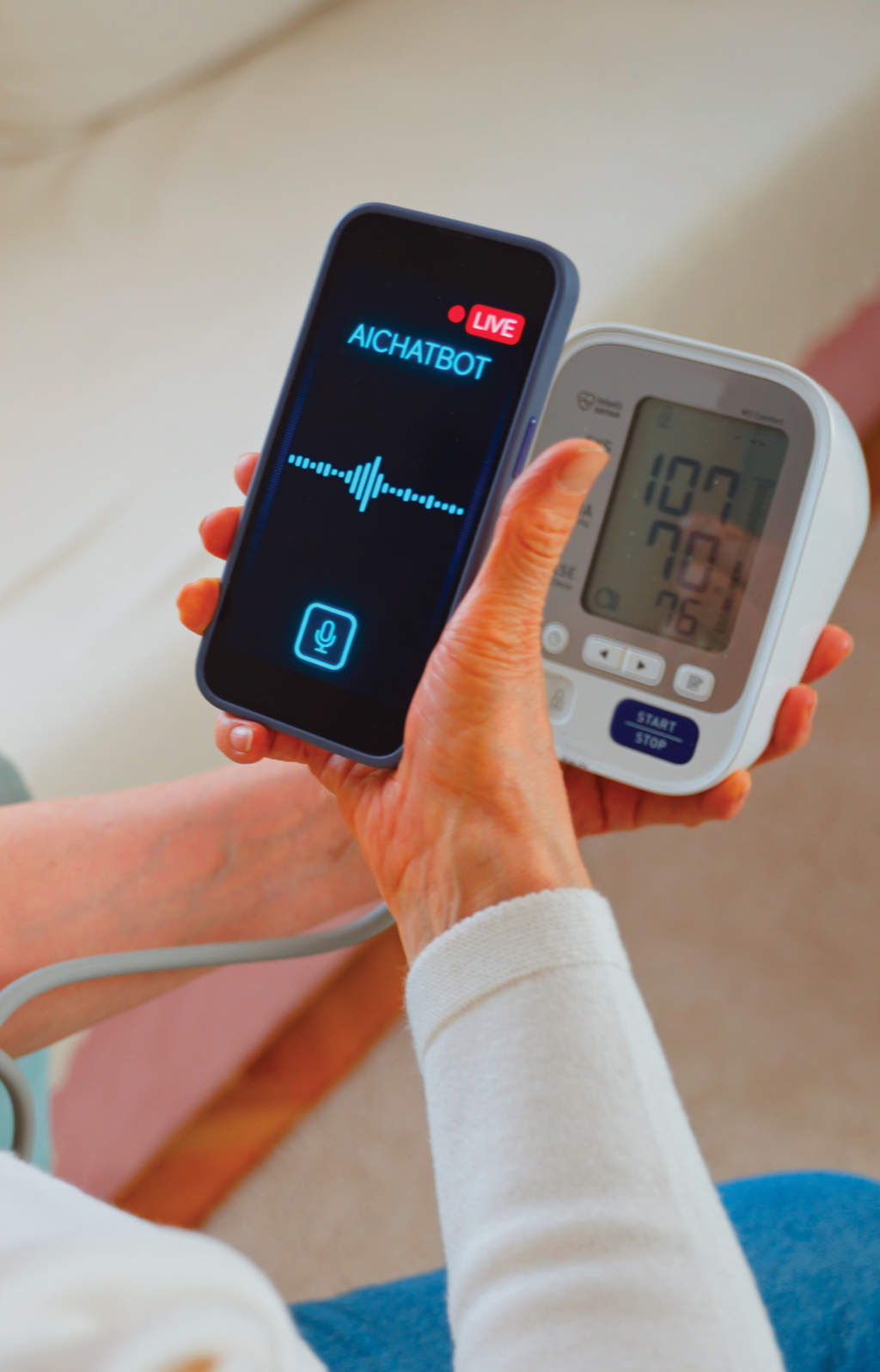
As patients increasingly turn to artificial intelligence for information about their symptoms, clinicians are encountering a new dynamic in the consulting room. Dr Emma Green and Dr Blesset Nkambule explore the benefits and medicolegal risks of AI-assisted self-diagnosis, and what healthcare practitioners should consider when patients arrive armed with AI-generated advice.
The volume of medical information online is vast, and we all have heard of, or experienced patients who have spent the night before their consultation frantically googling their symptoms and come in ready to explain their self-diagnosis. With the rapid advancement of AI and the ability of chatbots and large language models to give precise prompts and detailed, convincing responses, patients are increasingly turning to AI for a possible diagnosis and advice on what they should do next. In a country like South Africa where accessibility to healthcare can be an issue for many, it is easy to understand its appeal.
Whilst a more proactive approach to healthcare may bring some benefits, it can also present some complex medicolegal challenges for healthcare practitioners.
The good news
When used responsibly, AI has the potential to make patients more informed about their symptoms and possible health conditions, help patients better articulate their concerns and ask relevant questions. This may lead to more productive consultations. After an appointment, AI can help a patient interpret medical jargon from a specialist’s report, for example.
In some cases, AI tools may prompt patients to seek specialist input earlier than they may have otherwise. For example, a patient who uses a symptom checker that flags concerning symptoms might seek help earlier than if they had simply watched and waited. In this sense, AI could help close the gap between symptom onset and clinical evaluation which in some conditions could result in a significantly better outcome for a patient.
In some instances, AI may even identify patterns or possibilities that might be initially overlooked by human clinicians, especially in rare or complex cases.
Whilst not a substitute for a trained medical practitioner, AI may provide useful prompts that encourage both patients and doctors to consider broader differential diagnoses.
What to look out for
Despite these benefits, a study from 2025 on the diagnostic performance of various generative AI models found them to have an average overall accuracy rate of around 52%.
It is also far more likely that a patient interacting with AI will only focus on the symptoms that are present, as opposed to the absence of other significant symptoms that a clinician may attribute more weight to.
AI self-diagnosis also presents a host of other risks to both patients and clinicians. Symptom checkers erring on the side of caution and listing serious conditions can lead patients to believe they are facing a life-threatening illness when the actual issue may be benign. This unnecessary worry can cause or exacerbate anxiety in patients, and lead to other problems.
This is further compounded by the fact that, unlike a clinician, AI cannot take a nuanced history or observe non-verbal cues. It relies entirely on the information entered by the user. Crucially, it cannot factor in negative symptoms, such as absence of fever, if the patient fails to mention them. This can skew the AI’s diagnostic suggestions significantly unless it is able to use algorithms to ask a patient about potentially relevant negative symptoms.
Doctors may feel pressured by patients who arrive with AI-generated ‘diagnoses’ and expect corresponding investigations or referrals. When the clinician does not agree that such steps are clinically warranted, the patient may perceive this as dismissiveness, which could result in a consultation with skepticism or confrontation. While a clinician should be able to justify the need for or against investigations or referrals, having AI in the background may start to erode an already fragile health service, especially for a patient who trusts an AI tool more than their doctor.
Perhaps one of the most alarming issues for AI users is the phenomenon of AI hallucinations. Hallucinations occur when AI tools generate plausible sounding but factually incorrect or fabricated information. These are especially dangerous in a medical context, where patients are likely to assume the AI is authoritative and accurate.
Communication from clinicians and robust explanations of why an AI diagnosis may be incorrect will continue to play an important part in the role of healthcare providers.
From a legal perspective, hallucinations can introduce unique risks. If a patient acts on hallucinated information, such as self-medicating based on a false claim, the resulting harm could lead to a patient trying to bring legal action against AI companies. However, clinicians will still play a part in risk management and may face scrutiny if harm occurs and a patient alleges that an intervention by a healthcare professional was insufficient.
There are many ways healthcare practitioners can navigate conversations with patients who have utilised AI to research their symptoms. Here are a few of the most important:
- Document patient interactions carefully — document when a patient says they have used AI to self-diagnose and your rationale for agreeing or disagreeing with the AI diagnosis
- Address misconceptions respectfully — explain why a diagnosis or test is or isn’t required, referring to local or national guidelines where appropriate.
- Educate patients about AI limitations — help patients understand limitations such as hallucinations, bias, or missing context in AI tools.
Conclusion
While AI tools can improve health literacy and accessibility, and prompt earlier engagement, misinformation presented convincingly as fact, and patients not understanding the limits of the technology, can create risk.
Clinicians must remain vigilant to the evolving concerns of patients and where these arise from and be mindful of educating patients on both the benefits and risks of using AI for self-diagnosis.
AI can supplement care, but it cannot replace human clinical judgement or empathy.